

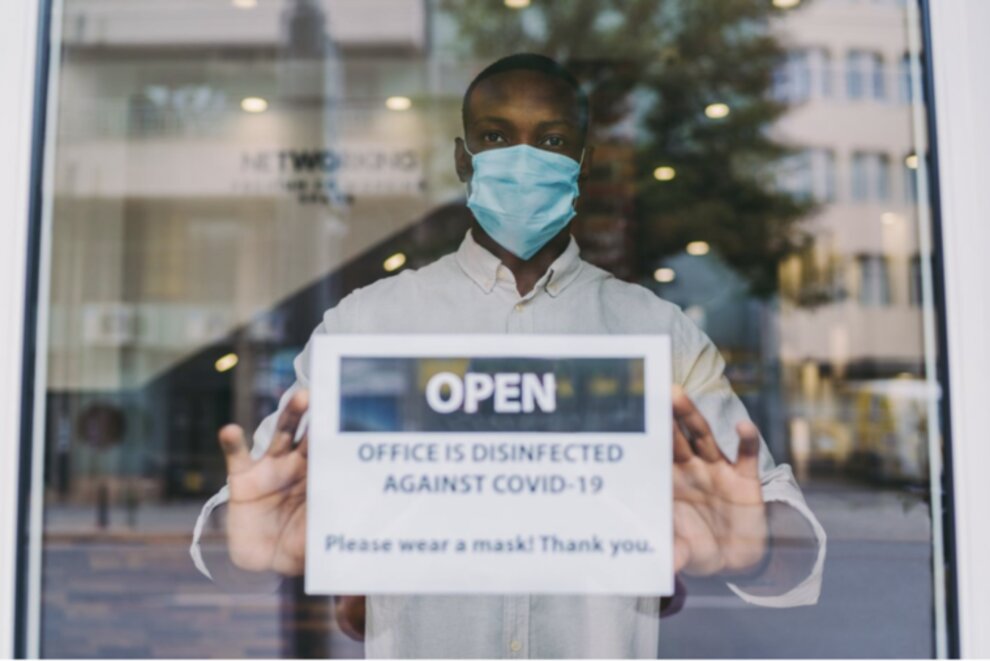
As we experience another increase in COVID-19 cases across the country, businesses must prepare for “What-If” scenarios and create structures that will allow them to continue operating safely amidst what changes may come.
Here is our suggestion for a solid game plan for your business:
Post Signage for Rules & Expectations
Provide clarity regarding all special instructions or rules, like masking, social distancing and vaccination requirements. Post signs in your business and offer up-to-date information on your website and social media platforms that clearly state your policies for customers and staff.
Protect your Employees
Vaccination remains the best way to protect yourself, your employees and your customers. Encourage staff members to get vaccinated and develop a sick absence policy that addresses the steps to follow if employees contract or are exposed to COVID-19. If your line of work allows, offer your employees a work-from-home option.
What if One of Your Employees Tests Positive for COVID-19?
Don’t panic: You don’t need to shut down. Have a plan in place to notify other employees and customers who came in contact with the infected person. Present information to them in a calm professional manner, and be available for questions and concerns, but you should not name the infected person in any statements you release.
Contact Oakland and Wayne County Health Departments if you have further questions on this.
Other Best Practices
As your business allows, move as much of your normal operations as possible outdoors. Set up outside structures using umbrellas, tents, side coverings, etc. Create structures according to local and state guidelines.
If your business doesn’t allow for outdoor services, try to maximize fresh air by allowing window and/or door ventilation. If you use fans, place them so air is not blowing directly from one person’s space to another.
Safety Plan Must-Haves
In addition to recommendations above, develop a detailed Business Safety plan that includes:
- Primary and secondary contacts for staff members, so protocol changes and developments are clearly communicated in a timely manner
- Decisions about business personnel and functions that are essential versus non-essential
- Close your office to non-essential employees and all visitors.
- If applicable, set up expectations for work-from-home employees.
- Supply sanitation supplies and distanced workstations for in-office staff members.
- Management and task forces
- Set up a team to assist in monitoring community status, assessing protocol, and changing plans.
- Schedule frequent company-wide meetings to keep all employees informed.
- Reinvestment in employee morale
- Expect your staff members to experience varying levels of stress and anxiety.
- Encourage managers to regularly check in with their team members.
- Prioritize employee well-being and be mindful of keeping morale high. Find creative alternatives for team bonding and self-care, such as short group meditations or virtual lunches via Zoom.
- Preparation to retain capital & continue operations
- Examine how delayed supply chains and lost productivity or revenue may impact your short- and long-term operations.
- Develop realistic projections for how operations and financing may be affected by changes in local and state guidelines and/or future closings.
- Determine and conserve capital required for your business to operate through the different projection periods.
While much may feel out of the control of business owners, planning in the face of rising COVID-19 cases can help keep your employees and customers safe -- and your business prepared to operate amidst another surge.
Let’s support each other in keeping our communities strong and healthy!